
In the article (July 20), commending voluntary termination of adults suffering from terminal illness, Kenneth Wain asserts: “My argument was made from the principle of personal autonomy: namely the individual right to choose for oneself how one wants to live and die.’’
For Wain, one’s freedom is absolute and no one has the right to dictate and decide what is allowed and not allowed when one makes one’s choices, even those concerning life and death.
He stresses that such freedom “stands for the ability to decide for oneself on matters political and moral and refers to the right to make one’s own life choices, even wrong ones…”
Such reasoning only applies to those who, like Wain, assert that our freedom is absolute and that there is no other being that is the author of one’s life.
What about those of us who profess to be Catholics and affirm that our freedom is limited and dependent on the will of our Creator? In a society like ours, which, though multicultural, is predominantly Catholic, one cannot allow the beliefs of the majority of its citizens to be ignored.
The latest religious census conducted in Malta, as part of the 2021 Census of Population and Housing, indicates that 82.6% of Maltese citizens identify as Roman Catholic.
Article 2 of the Maltese constitution declares that the Roman Catholic Apostolic Religion is the religion of Malta. So, our Catholic religion is an integral part of our identity as Maltese for it marks our choices and the way we live.
Archbishop Charles Scicluna, in his book Religion and the 1921 Maltese Constitution emphasises the fact that religion is part and parcel of our identity and should be taken into consideration when considering the context of our society. Scicluna argues: “Maltese society has quickly developed into a multi-ethnic society where different religions coexist.
The Catholic Religion still provides the nation with its historical heritage and narrative, with its ethos and ritual. The balance needs to be struck between the need to be inclusive of other religious experiences in order to promote social cohesion and the need to safeguard the unique religious narrative that has given Malta and the Maltese their unique culture.’’
Helena Dalli, now acting president and a former European commissioner when encouraging all of us to participate in the discussion on euthanasia, acknowledged the profound moral questions surrounding the topic and insisted that in our exchanges the policy shaped should reflect “Malta’s deeply held cultural and ethical values’’.
The social teachings of the Church emphatically states: “The Church cannot be indifferent to all that is chosen, produced and lived in the society in regard to morality, that is, all that is human and humanising in social life.’’
If one’s religion is part and parcel of one’s way of living and if in moral choices one cannot but follow one’s religious principles can a state, whose citizens are predominantly Catholic, ignore these principles?
Though there exists separation of powers between Church and state it doesn’t mean that one institution should act independently of the other.
Suicide – in whatever form it takes – should never be the solution to one’s suffering and agony– Ray Azzopardi
It would do the authorities good to reflect on Pope Benedict XVI’s thoughts when he met the Representatives of British Society at Westminster Hall, in London in 2010.
In that encounter the pontiff, when discussing the relationship between religion and politics, stated: “The central question at issue, then, is this: where is the ethical foundation for political choices to be found?”
The Catholic tradition maintains that the objective norms governing right action are accessible to reason prescinding from the content of revelation.
According to this understanding, the role of religion in political debate is not so much to supply these norms… but rather to help purify and shed light upon the application of reason to the discovery of objective moral principles.
Pope Benedict went on to suggest “that the world of reason and the world of faith – the world of secular rationality and the world of religious belief – need one another and should not be afraid to enter into a profound and ongoing dialogue, for the good of our civilisation.’’
Wain has a right to his views on life and the human person. But so do we, whose religious principles guide us in the way we look at life in general and the human person in particular.
Wain states: “One mustn’t ‘romanticise’ suicide but one mustn’t romanticise life either by treating it as an unconditioned good. Life ceases to be so when it is endless unendurable agony.’’
We all agree that suffering needs constantly to be alleviated and minimised as much as possible.
And by suffering we allude to all kinds of suffering whether physical, mental, psychological, spiritual or any other type. That’s the purpose and function of palliative care. But, as Catholics, we also believe that personal suffering is also a means of our sanctification when united with the suffering of Our Lord Jesus Christ.
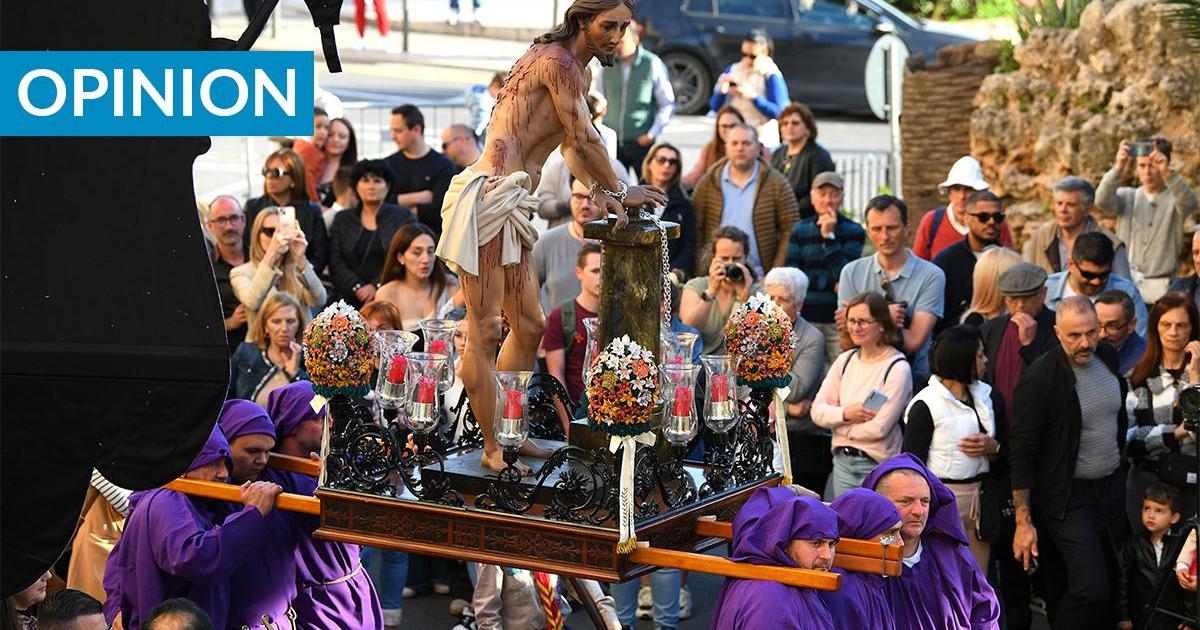
That’s why the Crucifix takes prominence in our churches, homes and public buildings.
Suicide – in whatever form it takes – should never be the solution to one’s suffering and agony. Faith in the Risen Christ is not an illusion for those who believe but a reality that keeps us hoping until we reach our final destination.

Ray Azzopardi is a former headmaster.
You can unsubscribe at any time by clicking the link in the footer of our emails. We use Mailchimp as our marketing platform. By subscribing, you acknowledge that your information will be transferred to Mailchimp for processing.
Announcements − August 19, 2025
A legacy built on results
To view comments, please register for free or log in to your account.