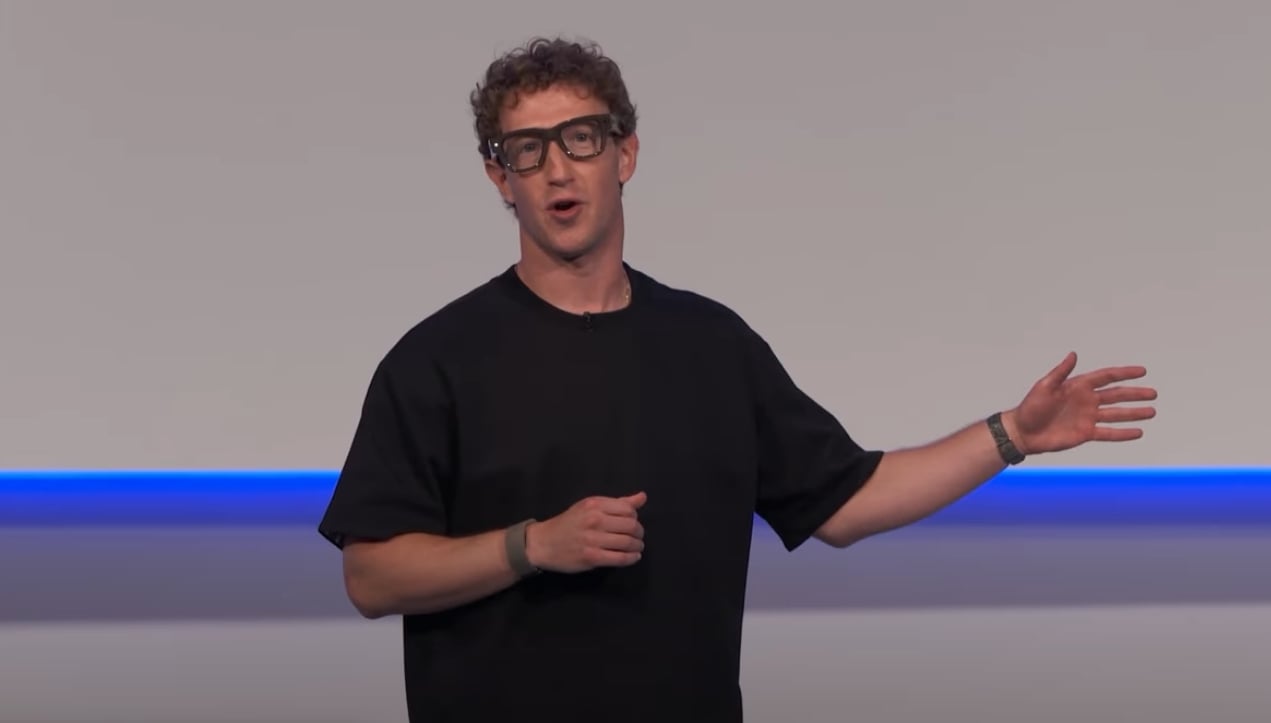
At Meta Connect 2025, the CEO demonstrated glasses that read your thoughts and translate them into text messages—no voice commands required.
The Meta Ray-Ban Display required four years and $70 billion in losses from Meta’s Reality Labs division. Now we finally see where that money went.
These aren’t your typical smart glasses. While previous versions required speaking aloud to send messages—awkward in quiet spaces—the new model works silently through mind-reading technology.
The secret weapon is the Meta Neural Band, a wristband that uses surface electromyography (sEMG) to detect electrical signals traveling from your brain to your hand. When you grip your fingers like holding a pen and “write” in the air, the device captures those neural impulses and converts them into digital text.
“I’m up to about 30 words a minute on this,” Zuckerberg said onstage at Meta’s Menlo Park headquarters. “You can get pretty fast.”
That speed nearly matches iPhone typing, where research shows people average 36 words per minute on touchscreens. Meta’s research participants typically hit 21 words per minute with the neural interface.
The glasses themselves pack cameras, speakers, microphones, and an AI assistant into Ray-Ban frames. A small display sits offset from your vision, showing Instagram, WhatsApp, Facebook, directions, and live translations without blocking your view.
Zuckerberg framed this as solving smartphone addiction. “The promise of glasses is to preserve this sense of presence that you have with other people,” he explained. “I think that we’ve lost it a little bit with phones, and we have the opportunity to get it back with glasses.”
The real motivation runs deeper. Meta wants to break free from Apple and Google’s app store dominance, where both companies take hefty cuts from Meta’s profits. Building the next computing platform means controlling the entire experience—and keeping all the revenue.
Meta has stumbled before. Remember when metaverse avatars finally got legs? The company’s virtual reality promises largely fizzled, making investors nervous about Reality Labs’ cash burn rate.
But the Ray-Ban Display feels different. This technology actually exists and works, unlike vague metaverse promises. During the demo, Zuckerberg quickly typed and sent messages through his glasses, even as some AI features failed due to Wi-Fi issues.
Meta has researched sEMG technology since 2021, previously showing a bulkier prototype called Orion. The company isn’t alone—Apple and Google are also preparing for a future where smart glasses replace smartphones.
The gesture controls extend beyond texting. Like Nintendo Joy-Cons or Apple Watch inputs, the wristband recognizes various hand movements. But if the silent typing works as demonstrated, it could enable far more complex interactions than current wearable devices allow.
The Apple Watch offers text input without voice commands, but the process is so tedious that users avoid it unless desperate. Meta’s neural interface promises fluid, natural communication that feels more like actual writing.
This represents Meta’s biggest gamble—possibly larger than the metaverse itself. Zuckerberg is betting that people will abandon their “sleek aluminum rectangles” for glasses that promise deeper human connection, despite the irony that he built the very apps demanding our constant attention.
“The technology needs to get out of the way,” Zuckerberg declared.
Whether smartphones join Nokia flip phones in tech graveyards depends on one crucial question: Can these glasses actually make us feel more present with other people, or will they just shift our screen addiction from pockets to faces?
Meta and its competitors are wagering billions that cultural sentiment will swing toward smart glasses. The Ray-Ban Display offers consumers their first real glimpse of this potential future—one where checking notifications means glancing at your glasses instead of reaching for your phone.
The neural wristband technology remains untested by independent reviewers. But if it delivers on Zuckerberg’s promises, the smartphone’s reign might face its first serious challenge in over a decade.
Today 

Today 
Yesterday
Yesterday
2 days ago
Today
Today
Yesterday
Yesterday
2 days ago
Founded in 2012, this project provides science and technology news from authoritative sources on daily basis.
Zuckerberg’s $70B Tech Quest Could Make Your iPhone Obsolete – Technology Org