In response to my article (August 19) entitled ‘Why one’s religion should not be ignored’ when discussing political policies with moral consequences, like voluntary euthanasia, Kenneth Wain (September 14) dismisses my arguments because he insists that we are living in a secular society and Malta is “no longer monoculturally Catholic’’. Wain goes on to assert that “Maltese society… is culturally diverse and morally pluralistic, that is, it acknowledges the presence of diverse moralities in its midst’’.
That our society has changed and has become more multicultural and diverse, especially in these last decades, is a fact. That various ethnic groups practise their own religion and have different views on life in general cannot be denied. But to acknowledge that in our society there exist ‘diverse moralities’ does not imply that, as a nation, we should abide by such ‘diverse moralities’.
Luckily, the majority of us share the same values embraced by us Catholics. These are the values that we need to go on promoting and preserving even though, yes, we acknowledge that we are living in a society where some members do not adhere to our Christian religion.
The point of discussion is not that our society is not multi-ethnic or not inclusive but whether, because of the influx of people with different beliefs and individuals with liberal views, we, Catholics, who presumably are in the majority, are not only given the right to express our views, especially when it comes to policies that have moral consequences, but our views are also given weight and consideration by the authorities concerned.
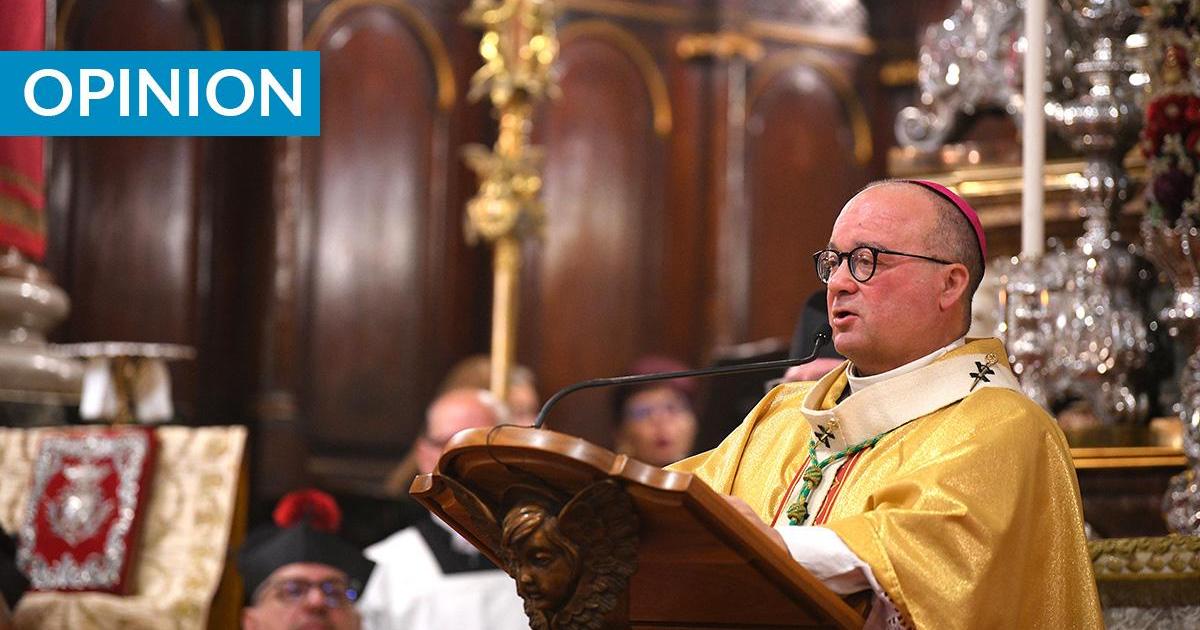
This was Archbishop Charles Scicluna’s point in his book Religion and the 1921 Malta Constitution where he states: “The balance needs to be struck between the need to be inclusive of other religious experiences in order to promote social cohesion and the need to safeguard the unique religious narrative that has given Malta and the Maltese their unique culture.’’
When Scicluna is insisting that we should “safeguard the unique religious narrative that has given Malta and the Maltese their unique culture’’ he is obviously implying that our Catholic religion is an integral part of our national identity.
When referring to national identity, Wain states: “A society’s identity is not a fixed, timeless, essence; it is a changing social and historical reality, and to the extent it grows freely (not under a dictatorship), it will invariably transform itself over time.’’ I fully agree with Wain that a society’s identity is not something static and fixed. But that is precisely the reason why we need to preserve what we treasure as valuable and want to pass on to our future generations.
Religion is the only compass of our moral actions– Ray Azzopardi
When we say we need to preserve what makes us Maltese, besides language, culture and history, we need to include religion. To insist that the religious element should not be ignored when decisions are taken concerning the human person is to insist that man needs to be considered in his totality. I speak from the Christian point of view where we believe that man is created in the image of God and, therefore, his spiritual dimension needs to be given importance.
That is the reason why I had referred to Pope Benedict XVI’s thoughts when discussing the relationship between religion and politics. Benedict affirmed: “The central question at issue… is this: Where is the ethical foundation for political choices to be found?’’
The moral voice for us, Catholics, comes from the Church’s social teaching. To ignore such a voice is to ignore that light that helps us decipher the right path to be taken for our own good and the good of society at large.
The social doctrine of the Church affirms: “The mutual autonomy of the Church and the political community does not entail a separation that excludes cooperation. Both of them serve the personal and social vocations of the same human beings.”
Cooperation between Church and state in policies affecting the human person, like voluntary euthanasia, in no way implies that one is advocating a confessional state. An open discussion implies what it states – open to all views without prejudices. This applies also when discussing abortion.
Following one’s conscience and adhering to one’s religious principles does in no way mean that one is coerced to act in such a way or that we, believers, don’t act with persuasion as Wain seems to imply.
Society is what it is and we accept it as it is. But it is in each one’s interest to promote those values that endure and help us improve our lifestyle irrespective of the make-up of our society.
We fight to preserve our language; we fight to preserve our traditions and history; why shouldn’t we fight to preserve and promote our Christian values? Religion should remain an integral part of our identity because it is the only compass of our moral actions.

Ray Azzopardi is a former headmaster.
You can unsubscribe at any time by clicking the link in the footer of our emails. We use Mailchimp as our marketing platform. By subscribing, you acknowledge that your information will be transferred to Mailchimp for processing.
Pharmacies open today – October 5, 2025
Letters to the editor – October 5, 2025
To view comments, please register for free or log in to your account.