
Ahh, tech companies. Innovation, hyper-modern offices, ultra trendy uniforms a la Silicon Valley and checking into your laptop and working from anywhere.
Well, sort of. In reality, widespread layoffs, a slowing economy and a shift in power back to employers has cut some of the perks techies once enjoyed, including a move away from remote work.
In September 2025 Microsoft announced that it was updating its flexible work expectations to three days a week in the office, switching from a policy where people could work from home as much as 50% of their time.
Its reasoning being that people thrive when working together in person.
Amazon took this shift further, requiring employees to work five days in the office from the start of 2025.
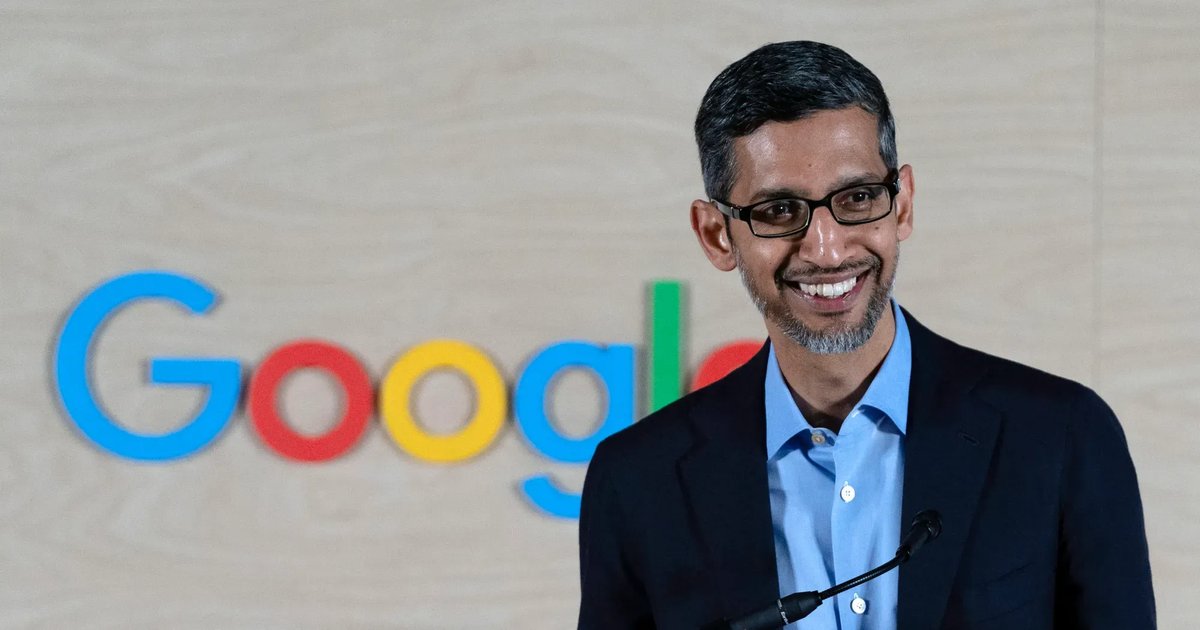
Now Google is joining the party. The Sundar Pichai-led company is reportedly making changes to its Work from Anywhere policy, introduced during the Covid-19 pandemic to allow employees greater flexibility to work from any location.
Google launched Work from Anywhere in 2021, providing a framework for employees to temporarily work from a location outside of their main office for up to four weeks per calendar year.
In a note to Googlers at the time, Pichai said “Google’s future workplace will have room for all of these possibilities.”
He explained that Work from Anywhere’s goal was to give everyone more flexibility around summer and holiday travel, telling teams that “the future of work is flexibility. The changes are a starting point to help us do our very best work and have fun doing it.”
Under the revised rules, revealed in internal documents reviewed by CNBC, working remotely for even a single day will now count for a full week.
CNBC reports the documents as saying “Whether you log 1 WFA or 5 WFA days in a given standard work week, 1 WFA week will be deducted from your WFA weekly balance.”
According to the documents, employees cannot use WFA to work in a different country due to the “legal and financial implications of cross-border work”.
Google also stipulates that WFA weeks “cannot be used to work from home or nearby.”
In a recent all-hands meeting, the company’s Vice President of Performance and Rewards John Casey said: “WFA was meant to meet Googlers where they were during the pandemic.
“The policy was always intended to be taken in increments of a week and not be used as a substitute for working from home in a regular hybrid work week.”
Google originally told all North American employees to work from home in early 2020, as Covid escalated.
Following expanded guidance, the firm introduced hybrid working on 5 May 2021. At the time, Pichai told staff that shifted working patterns during the pandemic has led to the company reimagining hybrid workplaces.
Outlining new multi-purpose offices, private workspaces and new video and virtual meeting technology, he said “these efforts will help us work with greater flexibility and choice once we’re able to return to our offices globally.”
As well as Work from Anywhere, Pichai announced hybrid work weeks, support for employees working globally and reset days, designed to help staff recharge.
The company isn’t changing its existing hybrid schedule, which allows teams to work three days in the office and two days remotely.
Microsoft’s revised flexible work expectations also now require employees to work three days a week in the office.
The business began rolling out the new policy in early September 2025 in three phases, beginning in the US before expanding to global locations.
In a note to staff, Amy Coleman, Executive Vice President and Chief People Officer, referenced experience from remote working during Covid, saying: “We’re not going back, and we shouldn’t. Instead, we should take the best of what we’ve learned and move forward.
“We’ve looked at how our teams work best, and the data is clear: when people work together in person more often, they thrive — they are more energised, empowered, and they deliver stronger results,” she added.
“As we build the AI products that will define this era, we need the kind of energy and momentum that comes from smart people working side by side, solving challenging problems together.”
Executive Vice President, Chief People Officer
VP Performance & Rewards
CEO
The focus of Business Chief's Digital Community is to provide our users with the Ultimate Digital Experience – an incredible digital magazine, a world-class website, an award-winning newsletter service as well as video reports, podcasts, blogs, webinars, white papers, research reports, virtual events and a database second to none.