
Sign in with
Forget Password?
Learn more
share this!
Share
Tweet
Share
Email
October 20, 2025
by Mike Krings, University of Kansas
edited by Stephanie Baum, reviewed by Robert Egan
scientific editor
associate editor
This article has been reviewed according to Science X’s editorial process and policies. Editors have highlighted the following attributes while ensuring the content’s credibility:
fact-checked
trusted source
proofread
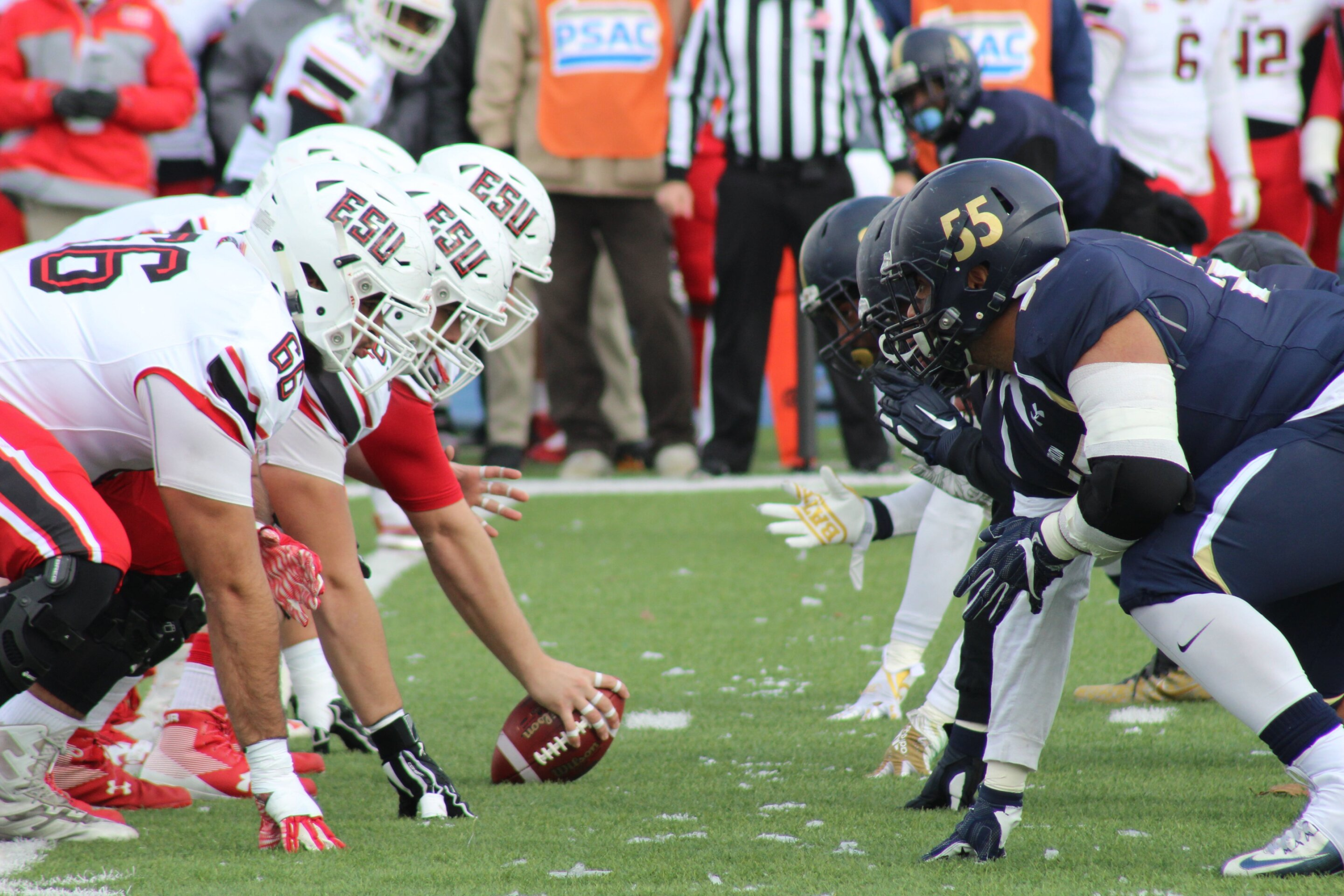
Until recently, there has been little data available on how much effort football players exert in games versus practices, which position groups run the most or how to balance loads in practice to best meet the needs of game day. New research from the University of Kansas is using global positioning system technology to provide those answers to coaches and trainers.
The study is published in the journal Frontiers in Sports and Active Living.
In research conducted with the football team at Division II University of Nebraska-Kearney, KU researchers found that practices could be 20% to 40% more physically demanding than games, that defensive backs tended to run longer distances than other position groups and that practices declined in intensity the closer they were to game day. But using technology to measure training loads and indicating how to use the data to improve performance may be the biggest contribution of the research.
“Quantifying these training loads is ultimately the first step. We have this technology in the football space, but there is room to determine how we use it,” said Quincy Johnson, assistant professor of health, sport & exercise science and assistant director of the Jayhawk Athletic Performance Laboratory, who led the study. “It’s now getting to the point where we can take action on the insights.”
The research team used GPS technology that placed a chip in mesh vests worn between the players’ shoulder blades. The chips are connected to satellites to provide accurate information on physical activity. For the study, researchers gathered data on total duration, total distance covered, yards per minute, hard running distance and hard running efforts.
Data was gathered from 27 players over 32 total practices and 11 games over the course of a season. Players were measured by position groups, including line, big skill (including linebackers, quarterbacks and tight ends) and skill (such as wide receivers and defensive backs).
Results showed there were significant differences in the three position groups in terms of total distance, yards per minute, hard running distance and hard running efforts, but there were not significant differences in total duration. For each position group, the training load in practices was significantly higher than it was during games. For linemen, practices had as much as a 22% higher training load, while big skill and skill were as much as 28% and 24% higher, respectively.
The study measured efforts of 14 starters and 13 nonstarters and found that starters had significantly higher measures of yards per minute, but nonstarters had significantly higher measures of hard running distance and hard running efforts. The researchers also noted that five of the players went on to play professionally. Their data showed higher training load in several measures.
Essentially, Johnson said, the data showed those players had the capacity to do more work in the same amount of time as their teammates. Such data could potentially be used by athletic staff to identify talent or continue developing talented athletes, he added.
Football, like all sports, includes many different schools of thought on how best to prepare players for game competition. One common approach is to have more intense practices early in the week and gradually reduce workload the closer the team gets to game day. The UNK team followed that approach, and the data confirmed that the first practice after a game had a higher training load for all position groups than each subsequent practice, concluding with a low-intensity walk-through the day before a game.
The results provide support to the notion that football players need to be able to train harder during practice and exert more effort than they will during game day to maximize performance.
Similar research has been done in soccer for years, but little has been conducted to quantify the training load in football.
“These findings support the notion that training has to be intense and that training loads sometimes need to be higher than they are in a game,” Johnson said. “Football requires more. What we know about managing load and monitoring it usually requires the load to be lower in most sports. We saw on the first and second days of practice it was more intense than the game, but by the third it tended to get lower.”
The Jayhawk Athletic Performance Laboratory, part of the Wu Tsai Alliance on Human Performance, is continuing GPS monitoring of athlete training loads and is now partnering with the KU football team.
Having athletes at the highest level of the game will enable researchers to continue collecting data on training load and help coaches, trainers and athletic staff design more effective practice schedules. That in turn can not only help maximize performance on game day but also shed further light on timelines for returning from injury and potentially provide a competitive edge to teams that know how to interpret the data, Johnson said.
“With this data, we can know and work toward better understanding, the best way to prepare athletes,” Johnson said. “This will help add to that understanding of preparation by position group and not just the performance piece, but a better understanding of injury risk, how to return from it and be ready for those situations.”
More information: Quincy R. Johnson et al, Periodization for success—in-season external training loads relative to competition load in American football, Frontiers in Sports and Active Living (2025). DOI: 10.3389/fspor.2025.1662240
Explore further
Facebook
Twitter
Email
Feedback to editors
6 hours ago
0
7 hours ago
0
8 hours ago
0
9 hours ago
0
Oct 18, 2025
0
19 minutes ago
34 minutes ago
39 minutes ago
55 minutes ago
58 minutes ago
1 hour ago
2 hours ago
2 hours ago
2 hours ago
2 hours ago
Jan 13, 2025
Oct 14, 2025
Aug 25, 2025
Aug 26, 2025
Feb 5, 2025
6 hours ago
7 hours ago
Oct 11, 2025
Oct 9, 2025
Oct 8, 2025
Oct 7, 2025
GPS tracking shows football practices can be 20–40% more physically demanding than games, with defensive backs covering the most distance. Training loads are highest early in the week and decrease before game day. Starters and future professionals exhibit higher work rates. Monitoring these loads can help optimize performance, manage injury risk, and tailor training by position group.
This summary was automatically generated using LLM. Full disclaimer
Use this form if you have come across a typo, inaccuracy or would like to send an edit request for the content on this page. For general inquiries, please use our contact form. For general feedback, use the public comments section below (please adhere to guidelines).
Please select the most appropriate category to facilitate processing of your request
Thank you for taking time to provide your feedback to the editors.
Your feedback is important to us. However, we do not guarantee individual replies due to the high volume of messages.
Your email address is used only to let the recipient know who sent the email. Neither your address nor the recipient’s address will be used for any other purpose. The information you enter will appear in your e-mail message and is not retained by Medical Xpress in any form.
Get weekly and/or daily updates delivered to your inbox. You can unsubscribe at any time and we’ll never share your details to third parties.
More information Privacy policy
We keep our content available to everyone. Consider supporting Science X’s mission by getting a premium account.
Daily science news on research developments and the latest scientific innovations
The latest engineering, electronics and technology advances
The most comprehensive sci-tech news coverage on the web