Beachgrit Home » Obituary: John Peck’s post-1967 life was “drugs, crime, religion, yoga and, somehow, an abundance of extraordinary surfing. “
By Matt Warshaw
“He married, moved often, quit surfing, buried two stillborn children, divorced, drank, drugged, recovered, relapsed.”
John Peck died this week, age 81, of cancer. He began surfing in the late 1950s and just kept going, decade after decade, era after era, trip after trip. I don’t know exactly when Peck paddled out for the last time, but it was late in the game—he was nothing if not durable, there are plenty of edits out there of John waltzing those soft roly-poly walls at Swami’s deep into his senior years.
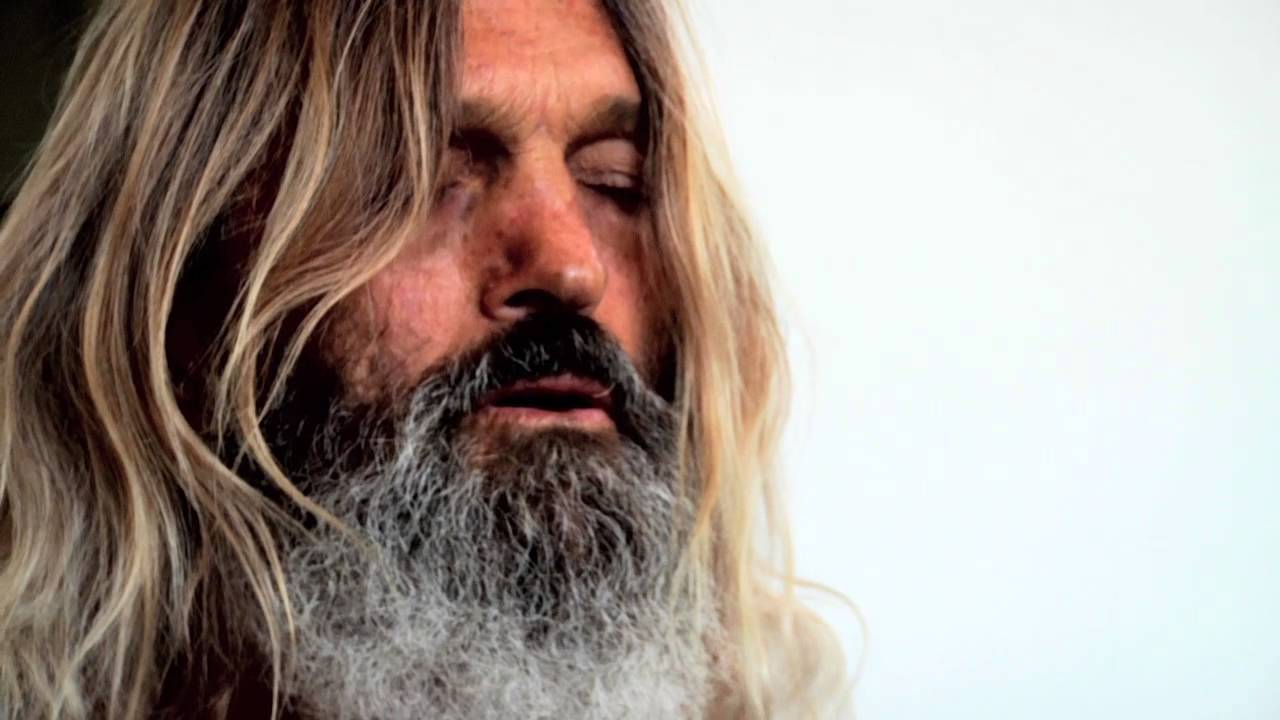
What a huge talent. Peck in the autumn of life was tall and nimble, stick-thin, with long steel-gray hair and a chest-cozy beard like the noseriding ghost of Walt Whitman.
Surfing was good for John.
He was from a well-to-do family, determined and physically gifted, both, and could have thrived at most any other sport. But only surfing could have given John a through-line from age 15, when he began riding waves at Coronado Beach, all the way to Thursday’s meet-up with Dharmaraja. Surfing got to Peck early and thorougly—before meditation, yoga, acid—and helped shape him. Peck, in turn, helped shape the sport.
Early Peck, for me, is the best Peck. There is no getting around the full-dress cosmic elder he became, but let’s start with the Pipeline and the Penetrator—our first and best impression of John Peck.
The Penetrator was a beak-nosed rocker-free double-stringered John Peck signature model longboard made by Morey-Pope, and I’m not sure if anybody but John could actually ride it. The board sold decently. It also allowed Peck to flaunt his talent for double entendre; his Penetrator, John said in a Morey-Pope ad, was “an effortlessly responsive tool” that “enables me to maneuver through positions previously thought impossible.” I appreciate too that John went Mod-lite (see below) to goose sales.
John would have earned a signature model even if he’d never seen the North Shore of Oahu. Style-wise, he borrowed without shame from Edwards and Dora, was loose and powerful, and at 16 he surfed just like fellow copycat Nat Young did at 16—except John got there first. He was a showman and crowd-pleaser, with a T-shirt that read “Yes, I’m John Peck.”
At Honolua Bay one afternoon, John paddled out with a lit cigarette and was still hitting it a minute or so later while trimming through a hot section. In 1966, he had a fantastic run through the Southern California competition season, finishing off with a win at the Laguna Masters in Redondo Beach.
All of this impressiveness took place in waist- to head-high surf. And all of it is now shadowed, or forgotten outright, because of what Peck did at Pipeline over the course of two or three years, but mostly on January 1, 1963—a surf-break debut for the ages.
John was 18 and had ridden Pipeline for the first time just a week earlier. On the afternoon prior, December 31, everyone on the North Shore knew for sure the surf would be pumping the next morning, but of course everybody also knew for sure that New Year’s Eve was going be ferocious, if for no other reason than the fact that Butch van Artsdalen and Dewey Weber were set on drinking the Island dry and so a party at Bud Browne’s rented beachfront house spiraled through a decathalon of drinking games, beer at first, then whisky.
Peck picks up the story:
The drinking contest came down to me and Butch because everybody else had either quit or passed out. Butch had finished his bottle of Scotch. Then he goes over to the icebox, opens it, pulls out a beer. Turns around and suddenly goes completely still. Then he slowly pitches forward, right onto his face. Candy Calhoun drags him into a corner and starts mothering him. Dewey is on the floor, barely coherent, slurring, “Well, that’s it! I guess you won, John!” I slide onto the floor, crawl out the back door, fall off the porch, and roll down the lawn into oblivion. Just before I went totally unconscious, Buddy Boy Kaohe is out there pissing on me, laughing his head off. “You may have won, but I’m still standing and I’m pissing on you!”
Then Bud and Buzzy [Trent] are holding me up, and Buzzy is going, “Look what you’ve done, John! Look what you’ve done to yourself!” They picked me up and carried me to where I was staying and threw me on the bed. Next thing I know someone is shaking me awake, saying “Butch is already out at the Pipeline! Come on, John!”
Peck, that morning, bloodshot and leaving a flammable trail of Black and White fumes in his wake, paddled out and over the next three hours laid pretty much all the foundation stones for surfing Pipeline backside. Van Artsdalen, a goofyfooter, caught bigger waves and rode deeper. In fact this was the day Butch more or less formally became “Mr. Pipeline.”
But for my money, and maybe just because I’m a regularfooter, Peck is the real groundbreaker here, starting with tucked-knee angled takeoff and the fin reset halfway down the face, then famously curling himself into that modified cannonball trim stance—folded torso, knees to chest, right hand clamped on the rail, head up and left arm pointing the way to the channel. Caity Simmers could do the same thing this New Year’s Day, except on a shorter board and while threading a fairground’s worth of paddlers, and be a Wave of the Winter contender.
Act Two. John Peck’s life from 1967 forward was a spin-art flux of drugs, crime, religion, yoga, mystic prattle—and, somehow, still, an abundance of extraordinary surfing. I have watched and admired a half-dozen or more short clips of John surfing over the past three or so decades.
But I’ve steered clear of all Peck-related interviews and features. In 2000, while researching the print version of EOS, Nathan Myers called John on my behalf, and the notes from that conversation were enough for me. I’m looking at a printout right now, and I won’t wallow here because the whole document to my eyes is little more than addiction residue and half-resolved mental health issues. Levitation, shape-shifting, space-travel, conversations with God, at least one person struck dead by God on John’s behalf, on and on. Peck was not shy or olbique when conjuring his past.
There were also drug-related indictments and convictions, jail time, institutionalization. He married, moved often, quit surfing, buried two stillborn children, divorced, drank, drugged, recovered, relapsed.
Peck returned to California in 1984 and got clean. Four years later he began riding waves again and the surf magazines soon reintroduced him as a rapturous yogi with a big inviting smile, surfing chops fully intact. Outwardly, he seemed an entirely different person than the swaggering “Yes, I’m John Peck” hotshot from the Kennedy years. Prayerful, sonorous voice, plain-spoken at times but never far from New Age verse.
What a comeback. You do not have to be onside with Peck’s beliefs or visions to recognize that, however he got there, he not only pulled himself out of the deepest and darkest of holes but found a healthy, sustainable, at times beautiful way of being.
Except was never that simple. Peck remained a work in progress, which is one way of saying that he could veer gnarly just as easily as he could crimp himself into full lotus. Peck’s temper was an open secret among those who surfed with him, and the episodes could be really unpleasent.
Watch here, and here.
I’m not especially put off by Peck’s behavior. Given what he’d been through in the, and given how everybody struggles with righteousness or life-balance or whatever you want to call it, as we age—few of us, really, are consistent. Surfing and meditation and freestyle sermonizing no doubt helped keep Peck from raging way more often. John himself maybe could have been more open about his own obvious dualities.
On the other hand, perhaps he was and we just weren’t paying attention.
One person on the receiving end of a 2016 Peck tirade, issued at night on a remote beach after some fireworks were set off and ruined the nocturnal vibe, with Peck unaware that he was screaming at a pair of surfers, ended when one of the guys said, “Hey, I used to see you surfing Swamis.”
Peck went silent. He backed away, turned and gathered himself, turned back.
“All of the rage from a moment ago was gone, replaced by a Ram Dass smile and eyes that could see into my soul. He stuck out his hand and, cool as a cucumber, said, ‘Hi, I’m John Peck’. He was gracious and apologized for losing his shit.”
This echoes what Peck told Surf Guide magazine way back in 1963, when he was just 19 years old: “I’m schizoid. I’ve always had an inferiority complex, no matter what. I feel inferior and cover up with a veneer of superiority.”
Peck always knew about his contradictions, in other words. We were the ones who wanted to see him only and exclusively in full lotus mode.
If John Peck got by, thrived even, for 40-plus years by fooling us and at times possibly himself that he could levitate and travel though space and had thus found enlightenment—that is not, in the big picture, much of a flaw.
And let’s not forget, on New Year’s Day 1963, at Pipeline, Peck pretty much did in fact levitate.
(You like this? Matt Warshaw delivers a surf history essay every Sunday, PST. All of ’em a pleasure to read. Maybe time to subscribe to Warshaw’s Encyclopedia of Surfing, yeah? A few shekels every month secures his genius.)
Beachgrit Home » Smokeshow Dakota Johnson reveals she loathes men who wear slaps in public
By Chas Smith
“If you see one… run.”
Of all the nepo babies in the land, the fairest, it could be argued, is Dakota Johnson. The 36-year-old daughter of Don Johnson and Melanie Griffith made her acting debut at ten, appearing in her step-father Antonio Bandaras’ film Crazy in Alabama. Her career a rocket to the moon ever since.
Johnson has had star turns in the Fifty Shades franchise, Cha Cha Real Smooth, Madame Webb plus many others. She is also freshly single after being tied to Coldplay’s Chris Martin for almost a decade.
Bachelors everywhere smacking gums but surf bachelors might be at a distinct disadvantage.
Johnson, you see, hates men who wear slippahs in public. Speaking to German Vogue, the global ambassador for Valentino was asked whether she has any red flags when it comes to men in her bachelorette-hood.
“Men who wear flip-flops in public,” she declared, adding if any woman sees such a creature she should “run.”
Slaps are, of course, very much part of the male surf wardrobe. Any gathering of surf males will undoubtedly feature at least 40% of the crowd in thongs, be they Rainbow, Reef or Olukai. Surf males really go for the casual beachy vibe that says, “I have a little bit of bad taste and drink Corona beer.”
I’ve got to say, I’m with Johnson, here, with one exception.
Dan Mann.
What a jandal-wearing hunk.
Beachgrit Home » Fashion markets rocked after Marc Jacobs quits Louis Vuitton to lead revival of surf nostalgia brand Billabong
By Derek Rielly
Will MJ at the helm bring you back to Billabong? Or has that ol ship long sailed?
For those who’ve come into surfing late, for those covid-era newcomers etc, a little lesson on the surf nostalgia brand Billabong.
Once upon a time, twenty, thirty years ago, it was the hottest thing in the game. Created by the gun shaper Gordon Merchant and his wife in a little apartment in Burleigh in 1973 it rose on the back of pro surfing to become wildly influential and insanely popular.
Billabong reached its peak share price in 2007, hitting fifteen Australian shekels on the Australian Stock Exchange, reflecting a market capitalisation of around A$3.8 billion, give or take a mill.
This zenith came amid a global surge in demand for surf and streetwear, bolstered by aggressive international expansion and high-profile sponsorships: Taj, Parko, Occ, Andy etc.
Investors, analysts and even the employees were optimistic, viewing Billabong as a millionaire factory.
The peak marked a stunning rise from its 2000 IPO price of A$2.60. However, this high was short-lived, as debt, pretty much, killed the whole dang thing.
In 2013, the company struggled with that debt alongside declining sales. Oaktree Capital Management, through its subsidiary Boardriders Inc., acquired Billabong for A$198 million, one buck a share, a 28% premium over its pre-offer price.
This takeover, completed in 2018, aimed to stabilise the brand amid competition and market shifts. Oaktree’s ownership included integrating Billabong with other surf brands under Boardriders, such as Quiksilver and Roxy.
In April 2023, Authentic Brands Group bought Boardriders for US$1.25 billion.
And here we are.
A post shared by The Fashion Community (@ntcsdo)
Moments ago, sexy Marc Jacobs, who’s been at LVMH for eleven years and whose eponymous brand used to drive the gals nuts, not so much after it was discovered the brand was using Raccoon Dog fur instead of the promised “faux” fur, joined Authentic following the company’s buy of the MJ label.
And it ain’t a stretch to imagine Marc Jacobs twiddling the knobs on Billabong, giving it some much needed juice, introducing cashmeres and swirling abstract floral prints and oversized silhouettes and ripped tights.
Will MJ at the helm bring you back to Billabong? Or has that ol ship long sailed?
Beachgrit Home » Australia’s famed rusty plunger-powered surf lake desperately seeking unwashed investors
By Chas Smith
“Give us your tired, your poor, your huddled masses yearning to own a piece of wave-generating tech for $1,047.80.”
So yesterday, David Lee Scales and I were chatting (listen here), as we do twice a week, and I began marveling, aloud, about how none of the wave-making technologies have come to dominate the market yet. We have Kelly Slater’s plow, Tom Lochtefeld’s air cannons, Wavegarden’s hydrofoils and levers, plus others that I can’t remember. At this point, I was thinking, one of them should have separated from the pack and become the de facto standard for the majority of new builds.
A bold man could take advantage of the current neck-and-neck situation and throw some money behind the Rusty Plunger. Surf Lakes’ proprietary wave-making technology, a large rusty plunger that makes waves by going up then down, is the only wave-making technology open for investment to plebes.
“Surf Lakes is happy to announce that our first Reg CF round is open!” the team announced back in May. “What does this mean? Anyone in the USA (over 18) can invest, with a minimum of just $1,047.80. For the first time, we are opening our doors to the general public, giving everyday investors a chance to be part of the next generation of wave-making technology. For Australians, we have a similar offering coming for you soon.”
$1,047.80? Even a poor bold man could maybe scratch that together but he better hurry for the funding round closes in five-ish days.
According to Surf Lakes, the surf tourism market is an “untapped $65 bn opportunity.” Eight rusty plunger licenses have already been sold, including Las Vegas, Dallas and Oahu. Investors will see a return on that $1,047.80 because Surf Lakes is “enabling developers to build profitable parks with unmatched wave capacity, a business model that combines upfront licensing fees with recurring income from operations and partnerships.”
360,000 social media followers are also dangled as an asset.
So?
Are you in?
Hustle here.
Beachgrit Home » Kanye West loses $36.3 million on sale of Tadao Ando-designed Malibu mansion
By Derek Rielly
“Kanye West bought an architectural treasure – then gave it a violent remix.”
The chanteur Kanye West, variously known for his excellent flexes – What’s Gucci, my nigga? What’s Louis, my killer? What’s drugs, my dealer? What’s that jacket, Margiela? Doctors say I’m the illest ’cause I’m suffering from realness Got my niggas in Paris and they going gorillas, huh – as well as a distaste for the already much maligned Hebrew, has taken a thirty-mill plus hit on the sale of his beachfront Malibu mansion.
The Chicago-born fiddler of studio knobs pissed away the three bricks following the troubled three-year renovation of the iconic Tadao Ando house in Malibu, which was stopped by city authorities.
The Tadao Ando Malibu House, 24844 Malibu Road which he bought for fifty-seven mill in 2021, became an experiment where Ye indulged his fascination for architecture alongside his new gal’s university-honed skills.
In the New Yorker, Ian Parker tells the compelling saga of Ye buying the joint from financier Richard Sachs, who originally wanted seventy-five mill for the house – and employing a cowboy tradesman called Tony Saxon to sleep in the place while simultaneously destroying it, eventually re-listing it for sale at $39 mill.
Check out the house before.
And after.
The listing, handled by pint-sized Selling Sunset star Jason Oppenheim, languished.
Oppenheim gamely touted its “architectural integrity,” estimating millions more to restore, but buyers balked at the burned out German bunker on Normandy Beach vibe.
Prices tumbled: $39 million in April, then whispers of fire-sale desperation.
Nearly three years after acquisition, the property finally found a taker, a crowdfunded firm called Belwood Investments, snapping it up for $21 mill. The math swas pretty brutal: a $36 million loss, not counting renovation costs that likely pushed Kanye West’s total hit past $40 million.
Belwood, undeterred, pledged $5 million to resurrect Ando’s vision, aiming to flip it for $40 million in 12-16 months.
Founder Bo Belmont hailed it as a “phenomenal investment” in preserving Malibu’s heritage.
For Kanye West, it’s a stark ledger entry in his turbulent portfolio. His Calabasas ranch, once home to the shuttered Donda Academy, sits neglected; he bounces between luxury hotels like the Chateau Marmont and Nobu Ryokan.
This ain’t just financial folly, it’s a metaphor for Ye’s chaotic genius.
Ye’s worth almost three bill so, comparatively, it’s like someone on a hundred gees losing a thousand bucks.
If it was Elon Musk, world’s richest man doin’ the losin, it’d be the equivalent of six bucks.
© 2025 BeachGrit All Rights Reserved