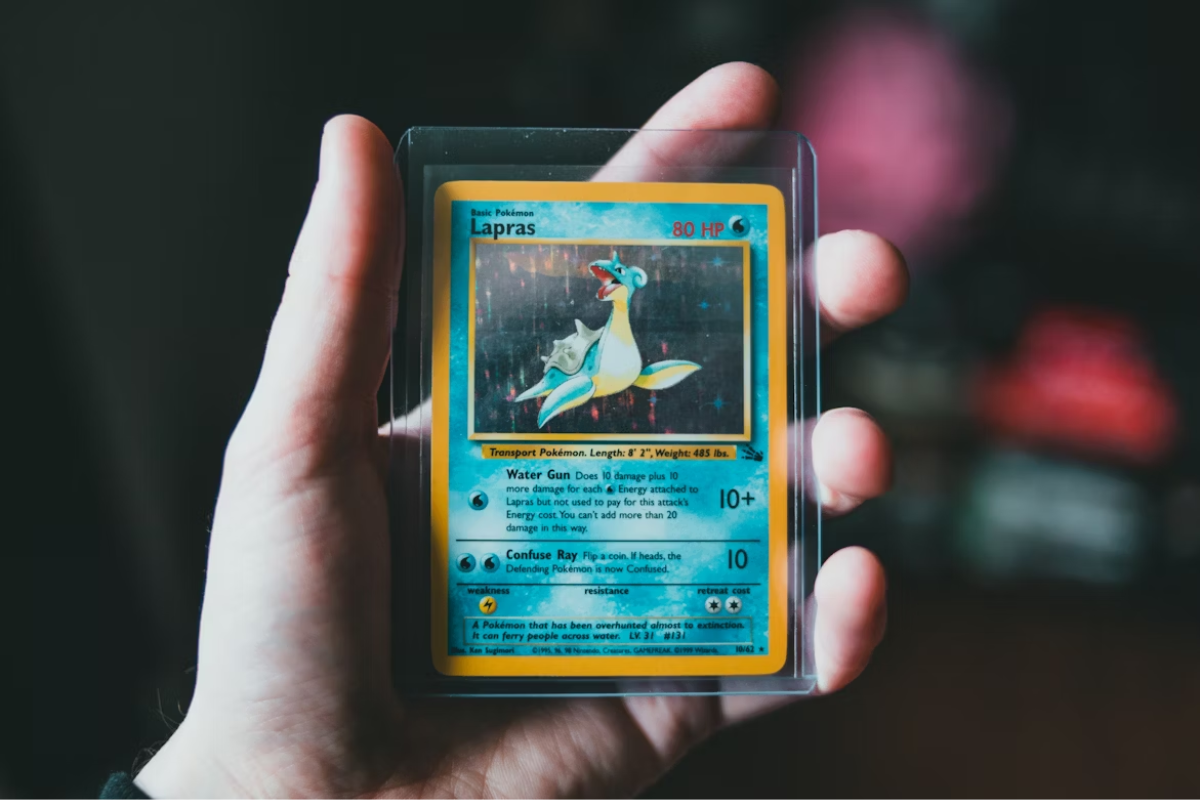
Opening a pack is one of the most exciting parts of the collector experience. It creates suspense, thrill, and joy captured in countless YouTube and Twitch streams. A beloved ritual for physical card collectors can now be performed online as well, using non-fungible tokens (NFTs), with results recorded immutably on the blockchain.
Pokémon is one of the most iconic collectibles to be tokenized. Unlike most NFTs, they are more than digital images on a blockchain. When you buy tokenized Pokémon cards, you receive a token that can be redeemed for a real-life physical trading card.
We will break down how these Pokémon packs work, so you can feel the fun of “rip and reveal” without any trouble.
A Pokémon NFT pack is a virtual alternative to the sealed physical booster packs that collectors have been buying at brick-and-mortar shops for a long time. It contains an NFT linked to a real-life, tokenized, and professionally graded Pokémon card stored in a secure vault.
Some cards are rarer than others, giving collectors the chance to discover exclusive and highly valued pulls in each pack. These packs can be bought, opened, and sold online on specialized NFT marketplaces, and yet they are directly linked to their physical card through a redemption mechanism.
Therefore, when buying Pokémon NFTs, you get more than digital art or metadata. You receive a certificate of ownership for an actual card that you can claim and have delivered to your doorstep.
Additionally, you can trade these NFT cards instantly on a marketplace, without dealing with the usual issues of physical card trading, such as shipping delays, damage, or loss.
Pack opening is the final stage of a structured process that guarantees authenticity, fairness, and the ease of opening, trading, or redeeming the revealed cards. Let’s take a closer look at how this process works.
NFT marketplaces with the pack opening feature presented here source authentic physical cards only from trusted sellers, wholesalers, and individual collectors. Once acquired, each card is sent to a professional grading service such as Professional Sports Authenticator (PSA), Beckett Grading Services (BGS), or Certified Guaranty Company (CGC).

Grading verifies that the card is authentic and assesses its condition. The assigned grade, usually on a scale from 1 to 10, reflects such factors as image centering, the condition of the card’s edges, the flawlessness of its surface, and the state of its corners.
The highest grade, like PSA 10, means that the card is in mint condition, and a lower grade, such as PSA 7, indicates minor flaws in one or more areas. The final grade directly affects the card’s value and popularity among NFT collectors.
Once graded, the physical Pokémon cards are placed in secure climate-controlled vaults operated by independent third-party providers. That way, these physical assets remain protected from environmental damage, theft, or mishandling until redeemed by a buyer.
When a collector decides to redeem a Pokémon card, the vault operator handles packaging and shipping, using services that make sure the card arrives in perfect condition. Any damage or loss during the storage period or transit is usually covered by insurance.
Tokenization is the process of creating a unique digital asset from the physical Pokémon card after it’s been graded and stored in the vault. It recreates it in the form of an NFT that contains detailed metadata about the card. This includes the card’s grade, its serial number, high-resolution images, and other important information like vault location.
The tokenized version of a physical card allows its owner to trade it on an NFT marketplace without physically handling it. When the collector redeems the Pokémon card, the token associated with it is burned or otherwise removed from circulation to eliminate the possibility of fraud or duplication.
Once tokenized, the Pokémon cards are placed into digital packs according to their rarity level and value to form drop rates that determine the pack’s price. NFT marketplaces use different methods to guarantee fairness and transparency when distributing the cards through the packs.
For example, Magic Eden uses the process based on a Pseudo-Random Number Generator (PRNG) that utilizes the commit/reveal pattern. When a collector decides to buy a pack, they first commit their choice to the blockchain. After this, Magic Eden’s algorithm generates a digital signature that is verified on-chain. It then produces a random number, which fairly determines the rarity of a card in the pack.
Once the packs are created and randomized, collectors can buy Pokémon NFTs on Magic Eden or other marketplaces easily with crypto. Once purchased, the pack gets stored in the collector’s wallet until they are ready to “rip” them and reveal the content.
The blockchain then executes the randomization process and reveals an NFT in arbitrary rarity and value. Some NFT platforms allow collectors to see the rarity tiers or categories of cards that packs could contain. This gives the buyer an idea of potential value without revealing the content.
After ripping a Pokémon NFT pack, collectors can transfer the token to a digital wallet, trade it on a marketplace, use the instant buyback feature, or opt to redeem it for the physical card.
The instant buyback feature allows users to instantly sell their NFT back to the platform at a set price. For instance, Magic Eden offers the payout of up to 90% of the collection’s floor price. This way, a collector gets immediate liquidity without having to wait for a buyer on the marketplace.
If collectors believe they can get more value from the cards that came from the packs, they can easily list them for sale on the marketplace or keep them in a digital wallet until market conditions are more favorable.
Here are three fully reliable NFT marketplaces that combine the thrill of pack ripping with a secure trading experience.
Magic Eden is a major cross-chain NFT marketplace that offers a full view of the current market through NFT aggregation. It has recently expanded its offerings to include Pokémon packs on Solana via a partnership with Collector Crypt.
It’s a go-to place for both new and experienced collectors thanks to a user-friendly interface, wide support of wallets and blockchains, and top-notch security. 
Courtyard is a more specialized marketplace than Magic Eden as it focuses on graded physical collectibles, such as comics, sports cards, and Pokémon.
When it comes to NFT packs, this platform offers a vending machine-style distribution system that adds extra style and excitement to the pack-pulling process. Courtyard has an instant buyback for up to 90% of the card’s fair market value. 
Collector Crypt is a trusted NFT marketplace with a focus on Pokémon and sports collectibles. It features the Gacha-style pack system, which replicates the mechanics of Japanese capsule machines.
Its recent partnership with Magic Eden has expanded Collector Crypt’s reach to a global collector community, as the platform upholds high standards of grading and secure vault storage for every physical card.
Pokémon is a legendary brand, with physical cards that have been popular and valuable worldwide for decades. Now, thanks to blockchain and secure vault storage, collectors can buy and trade Pokémon cards more easily, at the same time enjoying the same thrill of pack ripping.
Marketplaces like Magic Eden have made collecting Pokémon NFT packs much easier than visiting a physical store, simultaneously keeping the excitement of opening a real pack and the chance of pulling a rare card. They offer collectors the perfect blend of convenience, security, and fun.
At the heart of the ever-evolving gaming and gambling industry lies EuropeanGaming.eu, a trailblazing online platform that has become the go-to destination for industry professionals, enthusiasts, and stakeholders. As part of HIPTHER, we’re redefining how the gaming world connects, informs, and inspires.
Reaching over 300,000 readers monthly, EuropeanGaming.eu goes beyond headlines to deliver compelling stories, expert insights, and the latest industry news. From regulatory updates and compliance breakthroughs to the pulse-pounding world of esports and technological advancements, we provide comprehensive coverage of the topics that matter most:
Whether it’s daily news, exclusive interviews with industry leaders, in-depth event reports, or press releases that set the tone for the future, our content resonates with a global audience while maintaining a focus on Europe’s dynamic gaming market.
Our impact doesn’t stop at digital content. EuropeanGaming.eu is a proud host of virtual meetups and industry-leading conferences that spark dialogue, foster collaboration, and drive innovation. Through detailed reports and live events, we create a space where operators, suppliers, regulators, and professional services come together to shape the future of gaming.
At HIPTHER, we believe in empowering the gaming community with knowledge, connection, and opportunity. EuropeanGaming.eu embodies this spirit by serving as a one-stop resource for the latest trends, market developments, and global perspectives. Whether you’re an industry veteran, a rising operator, or a gaming enthusiast, this is where you find the stories that drive progress.
Let’s shape the future of gaming together!
Copyright © 2015 – 2025
European Gaming is proudly part of HIPTHER. Registered in Estonia under HIPTHER OÜ, Registration no.: 17339889, EU VAT ID: EE102909106.
Join us as we celebrate a decade of delivering excellence and embrace the magic of what’s to come in 2025 and beyond!
We are constantly showing banners about important news regarding events and product launches. Please turn AdBlock off in order to see these areas.
We value your privacy
We use cookies and other technologies to keep the site reliable and secure, tailor your experience, measure site performance and present relevant offers and advertisements, as described in our privacy policy and cookie policy.
Our website uses cookies, as almost all websites do, to help provide you with the best experience we can.
Cookies are small text files that are placed on your computer or mobile phone when you browse websites.
Our cookies help us:
– Make our website work as you’d expect
– Remember your settings during and between visits
– Offer you free services/content (thanks to advertising)
– Improve the speed/security of the site
– Allow you to share pages with social networks like Facebook
– Continuously improve our website for you
– Make our marketing more efficient (ultimately helping us to offer the service we do at the price we do)
We do not use cookies to:
– Collect any personally identifiable information (without your express permission)
– Collect any sensitive information (without your express permission)
– Pass personally identifiable data to third parties
– Pay sales commissions
Privacy Policy
Terms of Service
We use cookies to make our website work including:
– Remembering your search settings
– Allowing you to add comments to our site
There is no way to prevent these cookies being set other than to not use our site.
Cookies Used
Cookies are widely used in online advertising. Neither us, advertisers or our advertising partners can gain personally identifiable information from these cookies. We only work with advertising partners who work to accepted privacy standards such as http://www.youronlinechoices.com/uk/iab-good-practice-principles.
You can learn more about online advertising at http://www.youronlinechoices.com . You can opt-out of almost all advertising cookies at http://www.youronlinechoices.com/uk/your-ad-choices although we would prefer that you didn’t as ultimately adverts help keep much of the internet free. It is also worth noting that opting out of advertising cookies will not mean you won’t see adverts, just simply that they won’t be tailored to you any longer.
We fund our site by showing adverts as you browse our site. These adverts are usually managed by a partner specialising in providing adverts for multiple sites. Invariably these partners place cookies to collect anonymous data about the websites you visits so they can personalise the adverts to you, ensure that you don’t see the same adverts too frequently and ultimately report to advertisers on which adverts are working.
Cookies Used
We use cookies to compile visitor statistics such as how many people have visited our website, what type of technology they are using (e.g. Mac or Windows which helps to identify when our site isn’t working as it should for particular technologies), how long they spend on the site, what page they look at etc. This helps us to continuously improve our website. These so called “analytics” programs also tell us if , on an anonymous basis, how people reached this site (e.g. from a search engine) and whether they have been here before helping us to put more money into developing our services for you instead of marketing spend.
Cookies Used
So you can easily “Like” or share our content on the likes of Facebook and Twitter we have included sharing buttons on our site.
Cookies are set by:
The privacy implications on this will vary from social network to social network and will be dependent on the privacy settings you have chosen on these networks.
Cookies Used