In recent years, it has become laugh-to-keep-from-crying funny to read elite-media stories about important religion events and trends while waiting for the inevitable moment when President Donald Trump will enter the picture.
The question is not whether Trump is relevant in many of these stories. This is, after all, an age in which faith, culture and religious doctrines are frequently linked to debates about hot-button political issues. The question is whether Trump is placed front and center in every story, warping discussions of issues that were important long before he entered American politics.
Every now and then, especially when big stories are written by religion-beat reporters, Trump makes a brief (maybe even relevant) appearance — but then the story moves to other voices and other questions. That’s what happened in the Washington Post report — “Religious leaders say they’re observing a hidden trend among younger Americans” — that served as the hook for this week’s “Crossroads” podcast. Consider this crucial passage in the story:
Talk of surging interest among young people has taken on a political cast in recent months. Earlier this year, the killing of conservative activist Charlie Kirk, who spoke often of his Christian faith, led to extensive public celebration of Kirk as a martyr whose death would encourage people to deepen their commitment to their faith. President Donald Trump on Thanksgiving seemed to lend credence to this prediction, saying, “more people are praying, churches are coming back.”
New data from the Pew Research Center does not support this idea of a revival.
According to an analysis of 2023-2024 Pew data released Monday, 56 percent of 18- to 24-year-olds identified with any religion, down from 74 percent in 2007. Also among 18- to 24-year-olds, a separate Pew survey this year finds about five times as many people have left Christianity since childhood as have converted to the faith.
“The main thing about young adults is that they are way less religious than older people, full stop,” Gregory Smith, senior associate director of research at Pew, told The Washington Post. “Unless something changes, the demographic patterns in the data suggest the long-term declines in religion will continue.”
But the story is more complex than that one set of numbers and the Post story digs into the larger picture.
For a year or more, Lutheran Public Radio host Todd Wilken and I have discussed mainstream stories focusing on reports of rapid growth in many churches — Catholic, Orthodox, Southern Baptist, Pentecostal, etc.
The facts make it clear that many churches are growing and, to some degree, it’s accurate to say they are experiencing “revivals” of some kind. I recently wrote two “On Religion” columns (click here and then here) focusing on a topic that has made headlines — the rising tide of converts in many Orthodox congregations.
But the growth is only one part of a more complex story. Note this paragraph in the first of those two columns:
The bottom line: The catechumenate class numbers are staggering. While some Orthodox parishes are shrinking, or have hit plateaus, many clergy are struggling to handle congregations that have doubled or tripled in size during the post-pandemic years. Parishes that rarely had catechumens now have 10 or more. Convert-friendly congregations that once had a dozen newcomers now have 50-150.
Some congregations are experiencing amazing growth and new life, while others — in the same traditions, perhaps even in the same regions — are experiencing decline and may eventually close their doors. Thus, the larger story here includes both “revivals” and “funerals.”
While some will see holes in this Washington Post story, it’s important that it includes solid material about both halves of that equation.
The bottom line: At this moment, it appears that the ongoing decline in religious life and practice in America has slowed or even stalled. However, that flat line hides the more complex reality.
It’s true that many religious groups in American life have continued to spiral into a demographic abyss. The implication in the Pew numbers is that other forms of faith must be growing — producing a standoff between the two trends and those relatively flat trend lines. To dig into some of those statistics, readers may also want to see this Religion News Service report: “Decline of religion remains stalled, says new Pew report. But there’s no revival yet.”
So there is no evidence of a nationwide state of revival? That’s true. But there are revivals — plural — in many sanctuaries.
Thus, here is a look some material about the “revivals” side of the equation, which the Post story describe as:
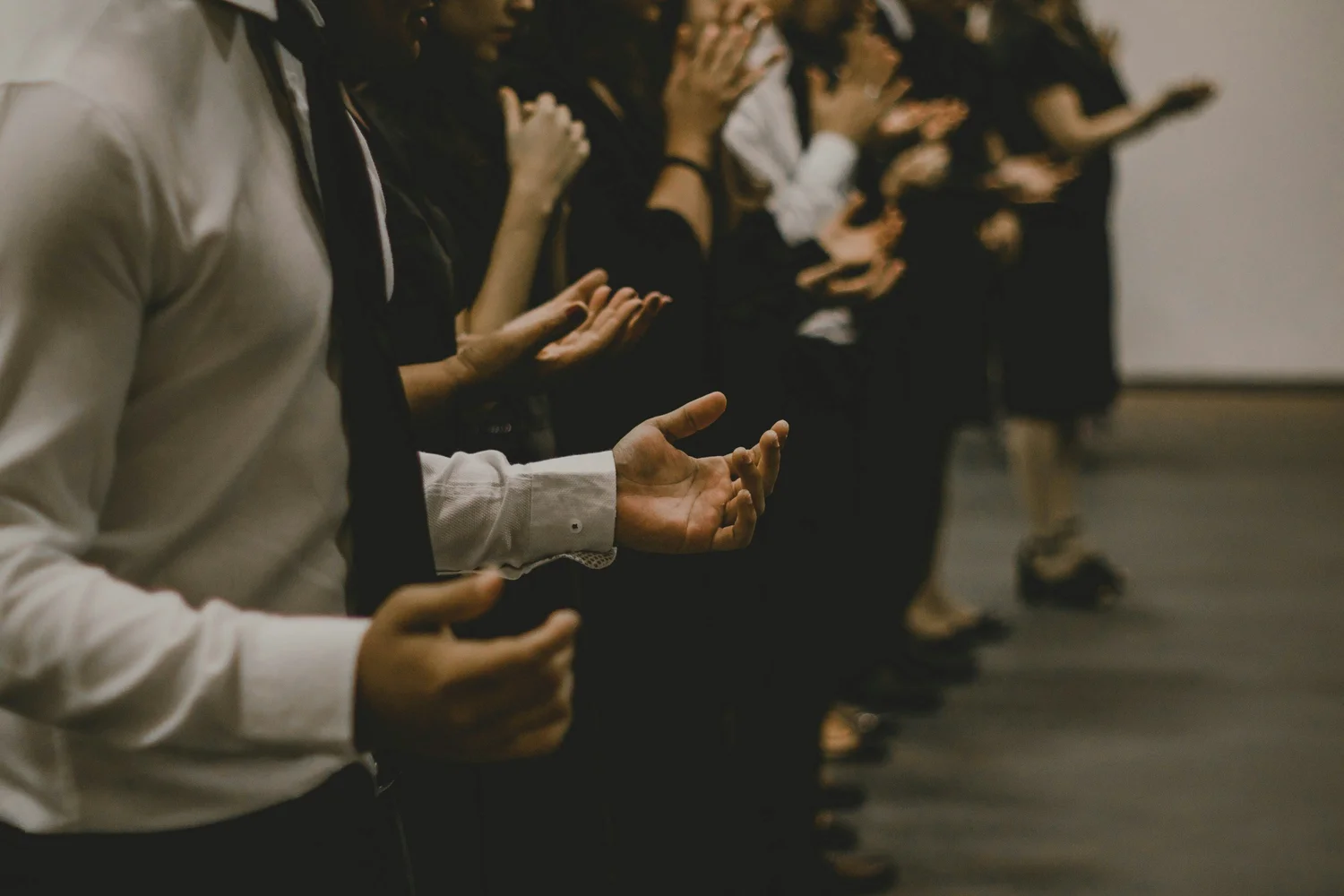
… a hidden trend religious and spiritual leaders say they are observing among younger Americans: Even as fewer and fewer young people consider themselves religious, a small percentage of young adults are practicing their faiths with unusual avidity. This cohort of people in their early 20s are rejecting both religion-by-habit (just doing whatever your parents did) as well as the secularism, skepticism and agnosticism that grew among their parents’ generations, religious experts say. And the examples of this surge, albeit anecdotal, are visible across faiths — including traditional brick-and-mortar worship of Catholicism, more Jewish college students attending the growing number of Chabad centers, and more esoteric spiritual practices such as Wicca-based full moon rituals and the West African system of divination called Ifa.
Remember, Generation Zero, coming after the Millennials — is quite large. Any surge of faith among Zoomers is going to be important. Here is more information about that, care of the Post and a very important source.
… Gallup polls find worship attendance among adults under 30 is up from 19 percent in 2020 to 25 percent this year, and anecdotes abound that a subset of young people is collectively pursuing spirituality in a highly individualistic era.
Christian Smith, a prominent sociologist who runs the Center for the Study of Religion and Society at the University of Notre Dame, says mainstream U.S. polling categories are missing a massive world of what he calls “enchantment” — young people seeking meaning in everything from paganism to magic to books and games about demons.
“The context is that our broader mainstream culture is a dead zone of larger meaning,” Smith said. Commercialism, careerism, technology that makes lofty promises with unclear costs, he says, don’t tell people: “What are we here for?
… Humans are constitutionally meaning-seeking, purpose-seeking.”
While working on my second column about the surge in Eastern Orthodox converts, I talked with insiders who note a trend that would have been impossible to predict a few years ago. In some rapidly growing parishes, there are now more “Zoomers” in their liturgies than there are “Boomers.”
The top of that “On Religion” column opened with information that echoes the Post story’s insight from Smith. This is long, but important:
The Orthodox baptism rite includes a three-stage exorcism that is extremely detailed about the spiritual warfare that surrounds new Christians.
Finally, there is this appeal to God: “Redeeming this Your creature from the yoke of the Enemy, receive him (her) into Your heavenly Kingdom. … Yoke unto his (her) life a shining Angel to deliver him (her) from every plot directed against him (her) by the Adversary, from encounter with evil, from the noon-day demon, and from evil dreams. Drive out from him (her) every evil and unclean spirit, hiding and lurking in his (her) heart.”
The “Enemy” is Satan. Catechumens are asked, three times: “Do you renounce Satan, and all his works, and all his worship, and all his angels, and all his pomp?” They respond: “I do renounce him.”
After several years of conversations while travelling nationwide, Father Andrew Stephen Damick is convinced these ancient prayers are painfully relevant to many converts surging into the small, but now growing, “Eastern Church” in America. It is no longer unusual to meet converts who have worshipped other gods and spirits.
“There’s a sense of disenchantment, both in the sense of people feeling disillusioned and sort of bummed by the culture in general, but also disenchantment in the sense of a disconnection from the unseen spiritual world,” said Damick, of the online Ancient Faith Ministries.
The converts want stability and guidance. Damick, via Zoom, stressed that many have “experienced the darkness of the unseen spiritual world and want to know what to do about that.”
Meanwhile, many other young seekers are looking for a sense of tradition, beauty and calm that contrasts with the blitz of news, entertainment, commentary, rumors and fake AI messages that surround them in daily life.
Let’s end with this typical testimony, care of the Post:
Dana Kang, a second-year Master’s student in mechanical engineering and renewable energy at the University of Maryland, grew up in a nonreligious family in Korea. Kang, 24, would sometimes join a friend at a Protestant church but was turned off by things the pastor said that even as a young child she saw as wrong — such as his belief that
secular music is a sin, or his sharing of his political views. She visited a Catholic Church during her undergraduate education with a boyfriend, and felt drawn to its fixed worship and firm truths.
“People are looking for a place for refuge amid so much uncertainty, war and political instability,” Kang said at the recent post-Mass pasta dinner. She started conversion classes in August after researching various faiths and listening to a popular YouTuber called Redeemed Zoomer, who gets millions of views for catchy, animated videos explaining aspects of religion.
“Because the Catholic Church is the church Jesus Christ started, the teachings stay consistent over thousands of years, and in this world where everything else changes so quickly that’s one aspect I like. It’s consistent so it feels more real,” Kang said.
That’s all for now. Both sides of this story — the congregations that are booming and the others that preparing to close — are not going away. News consumers will need to seek out material from newsrooms that are willing to see the larger picture.
Enjoy the podcast and, please, pass it along to others.
5965 Village Way, Ste 105 255
San Diego, CA 92130
info@themediaproject.org
(858) 396-3590
Religion Unplugged is part of The Media Project and a member of the Institute for Nonprofit News.
EIN: 83-0461425
Site design by Peter Freeby
Crossroads Podcast: A Christian ‘Revival’ Taking Place Among Some Flocks – Religion Unplugged