Jehan Loza
Moments of violence test more than a nation’s security. They test its imagination.
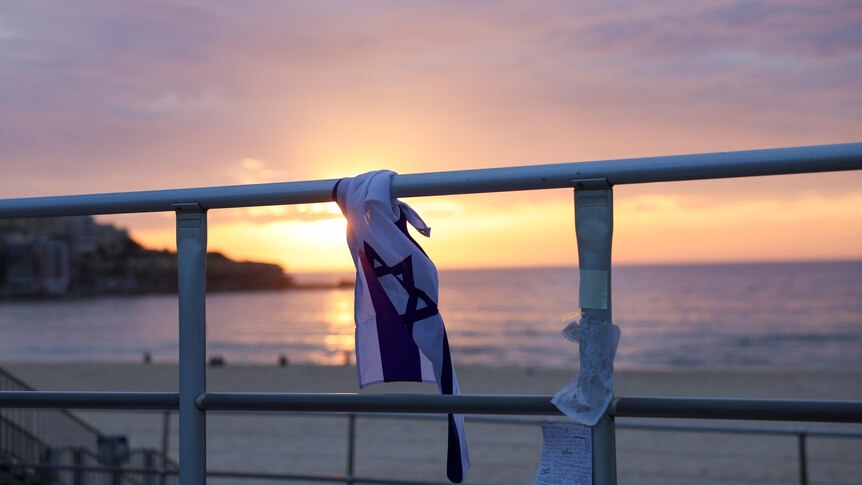
The attack on the Jewish Australian community at Bondi Beach on 14 December 2025 confronted us not only with grief and fear, but with a harder question: who is the “we” we reach for in moments of crisis? And is that “we” something natural and settled, or something ideological — constructed, fragile, subject to strain?
Jewish Australians were the direct targets of this violence. For many, the attack was not an abstract event but a sudden rupture of safety, felt across families, places of worship and the routines of everyday life. Any serious national response must begin by acknowledging this pain plainly, without qualification.
In the aftermath of violence, a familiar pattern follows. Grief slides into blame, and blame quickly attaches itself to identity. We begin looking for a group to fear, a category to hold responsible, drawing firmer lines between “us” and “them”. History offers no shortage of evidence about where this reflex can take us.
But what if this impulse tells us less about the danger of difference than it does about the fragility of our own national story?
For decades, Australian identity has been framed through the language of race, ethnicity and multiculturalism. These frameworks mattered. They named exclusion, challenged monocultural assumptions and made room for voices long pushed to the margins. But they no longer capture the complexity of a society shaped by interdependence, intercultural relationships and overlapping forms of belonging that cut across inherited categories of race, religion, sexuality, gender and ability.
Violence does not arise cleanly from identity itself. It grows out of psychological, social and ideological fracture. These fractures are not owned by any one community. They emerge when belonging becomes conditional, when exclusion and perceived threat take hold, when shared meaning erodes, and when people lose confidence in the institutions and narratives meant to hold them together.
In the public response to violence, identity categories are quickly mobilised. Yet what happened at Bondi Beach cannot be understood as a clash between religions or cultures. This is because individuals whose backgrounds would be collapsed into the same category in public debate were involved in radically different ways. While some committed violence, another ran toward danger and intervened to help prevent further loss of life. The same social fabric contained both harm and courage.
If we cannot sit with these truths at the same time, we are not ready for a mature national identity.
The problem is not that many Australians live with layered or multiple affiliations. It is that we continue to imagine national belonging as singular and pure. The lingering assumption that one cannot be fully Australian and fully something else remains an ideological fiction. In practice, identities are complex, relational and negotiated. They are shaped by context, and they surface most sharply under pressure.
Collective blame offers a kind of emotional relief, but it does so by trading complexity for certainty. Condemning violence does not require condemning entire communities, just as loving a nation does not require pretending it is innocent or internally seamless.
An Australian identity fit for the present century cannot be built on suspicion, rigid categories or the thin language of tolerance. This implies distance. Instead, what is needed is shared responsibility. Which is to say, belonging should rest not on origin or conformity, but on commitment — commitment to civic life, to mutual care, to the protection of human dignity and rights.
Nationhood, at its strongest, is not sameness. It is solidarity when that solidarity is tested.
Sign up for our weekly newsletter.
Moving forward requires acknowledging an uncomfortable reality: Australian identity is not finished. It is fluid, in motion and continually being reshaped through everyday social life. When we cling to static images of who “we” are — often borrowed from another time — we reproduce the very fractures moments of crisis make visible.
What such moments expose is not simply who we fear, but how deeply entangled we already are. Australian life is lived in the spaces between identities: between neighbours, colleagues, classmates, families and strangers who share public space. Violence tears at those interconnections, but it does not erase them.
Moving forward requires attending to that shared civic fabric. Not by highlighting or by denying difference, but by recognising that belonging is produced in relationship — it isn’t inherited through identity. It is in those daily, often invisible interdependencies that a more resilient Australian identity can be grounded.
Jehan Loza is a sociologist and writer with a PhD in Australian studies. Her work examines identity, belonging and nationhood in Australia. Before turning to fiction, she led a national social research and evaluation consultancy focused on cultural inclusion and community-led change.
The ABC’s Religion and Ethics portal is home to religious reporting & analysis, ethical discussion & philosophical discovery, and inspiring stories of faith and belief.
We acknowledge Aboriginal and Torres Strait Islander peoples as the First Australians and Traditional Custodians of the lands where we live, learn and work.
Who are ‘we’? Rethinking Australian identity in the aftermath of violence – Australian Broadcasting Corporation